


„Začala jsem, protože můj muž mě měl už dost.“ | Petra Ženíšková v Buď inspirující
Další díl podcastu Buď inspirující je tady! Tentokrát naše pozvání...


Kniha ( pevná vazba )


Při zaslání zboží balíčkem
K nákupu nad 699 Kč dárek zdarma v hodnotě 349 Kč
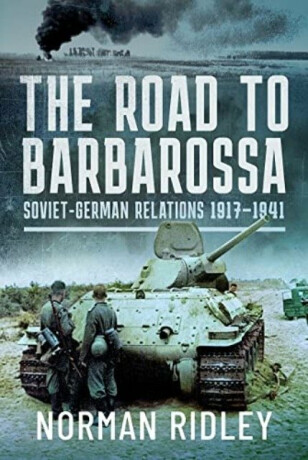
From the chaos of the First World War, during which Germany and Russia had fought each other to a standstill, there emerged two societies whose diametrically opposed ideologies of communism and fascism represented the opposite extremes of the political spectrum. Despite this, in time the governments and military establishments in both… Přejít na celý popis


5.0 z 5 hvězdiček
Voucher


5.0 z 5 hvězdiček
VoucherFrom the chaos of the First World War, during which Germany and Russia had fought each other to a standstill, there emerged two societies whose diametrically opposed ideologies of communism and fascism represented the opposite extremes of the political spectrum. Despite this, in time the governments and military establishments in both countries were able to create an environment where political expediency led to both cooperation and an eventual alliance. Western democracies found both systems repellent but the two countries, Germany and the Soviet Union, embodied vast resources of, in the case of the Soviets, raw materials and, in the case of Germany, huge intellectual, scientific and industrial expertise. Both offered massive opportunities for trade, but neither made comfortable partners. Britain, whose sympathies lay more with the Germans, and France, whose history tied them more to Eastern Europe, tended to treat both Germany and the Soviet Union as outcast states. This created a great deal of animosity in return and ultimately drove the outcasts into each other's arms. Whilst animosity was rampant on a political level, both countries, now having equal pariah status in the eyes of the Western allies, began to see huge benefits in military and economic cooperation. Collaborative ventures for covert armament production and training facilities were initiated in 1921. These schemes would continue, with varying degrees of success, for more than a decade until the rise of Nazism in Germany put an end to it. The Spanish Civil War saw not only thee two rival political philosophies but opposing military doctrines also being tested against each other on the field of battle. It is remarkable, therefore, that these two nations emerged from this maelstrom to re-discover the spirit of Rapallo'. It was a spirit which culminated in the signing of the Molotov-Ribbentrop Pact in August 1939. Within weeks, both sides would display their unity as they fell together with ruthless efficiency upon the hapless Poland. This book looks at how these two strange bedfellows' dealt with western hostility and found ways to accommodate each other in a bid to recover from the economic devastation and dismantling of their historic territorial boundaries. The extent to which cooperation was achieved is unusual given the circumstances, especially as they had to contend with the machinations of the Western Powers. The era of the Molotov-Ribbentrop Pact proved to be a brief liaison, one that collapsed into savagery again when Hitler launched Operation Barbarossa just a few months later.
0.0 z 5 0 hodnocení čtenářů
0× 5 hvězdiček 0× 4 hvězdičky 0× 3 hvězdičky 0× 2 hvězdičky 0× 1 hvezdička


Získejte přehled o vývoji ceny za posledních 60 dní.
Další díl podcastu Buď inspirující je tady! Tentokrát naše pozvání...
Vánoce už pomalu klepou na dveře a s nimi přichází i každoroční otázka:...
Říká se, že není důležité vyhrát, ale zúčastnit se. Zkuste to...
V předchozím halloweenském čtení jsme se společně ponořili do umění...
Pro miliony diváků zůstane navždy kapitánem Jeanem-Lucem Picardem ze Star...
Co všechno musí vědět člověk, který komentuje finále mistrovství světa...
Tenhle rok vyšly dvě vlčí romantasy, které mě nesmírně bavily. Jednou z...
Pryč jsou dlouhé teplé letní večery, vládu už definitivně převzal...
Vánoce se pomalu blíží a s nimi také období, kdy bychom měli více myslet...
Ve stínu hor přežívají i ta nejtemnější tajemství
Justyna se vrací do krkonošské boudy Odrodzenie , kde ji čeká zmizelý domovník a zloději ve sklepení. Brzy vyplouvají na povrch tajemství z její temné válečné minulosti a dávná vražda.
Mohlo by vás zajímat
Mohlo by vás zajímat
Aby zachránila svého bratra, nechá se uvěznit
V Endlocku, brutálním vězení kde bohatí loví vězně pro zábavu, však narazí na dozorce, který jí začne být nebezpečně blízký.
Mohlo by vás zajímat
Mise: Prolomit Kód X!
Staňte se detektivem a pusťte se do napínavého souboje důvtipu! Sbírejte indicie, pokládejte správné otázky a rozluštěte svůj tajný kód dříve než soupeři.
Mohlo by vás zajímat
Mezi řádky se skrývá kouzelný svět!
A tentokrát ho můžete postavit z LEGO® kostek! Propracované dvoupatrové knihkupectví promění vaši knihovnu v místo plné příběhů, fantazie a drobných literárních překvapení.
Mohlo by vás zajímat
Geometrie s kočičím šarmem!
Kdo říká, že matematické pomůcky musí být nudné? Kružítko Legami Meow spojuje přesné rýsování s roztomilým designem, který potěší každého milovníka koček.
Každý měsíc společně přečteme tisíce knih





Tento web je chráněn službou reCAPTCHA a platí pro něj Zásady ochrany soukromí a Smluvní podmínky. | © 2001–2026 DOBROVSKÝ s.r.o. Všechna práva vyhrazena.





 KnihyDobrovsky.cz
 knihydobrovsky
 @knihydobrovskycz
 @knihydobrovsky