


Otevřeli jsme novou prodejnu KNIHY DOBROVSKÝ v Třebíči
Máme dobrou zprávu pro všechny čtenáře z Třebíče a okolí. Nově nás...


Kniha ( pevná vazba )


Při zaslání zboží balíčkem
K nákupu nad 999 Kč dárek zdarma v hodnotě 339 Kč
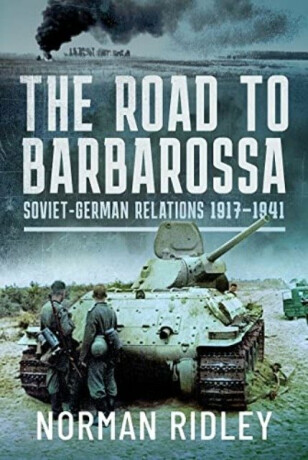
From the chaos of the First World War, during which Germany and Russia had fought each other to a standstill, there emerged two societies whose diametrically opposed ideologies of communism and fascism represented the opposite extremes of the political spectrum. Despite this, in time the governments and military establishments in both… Přejít na celý popis


5.0 z 5 hvězdiček
Voucher


5.0 z 5 hvězdiček
Voucher

From the chaos of the First World War, during which Germany and Russia had fought each other to a standstill, there emerged two societies whose diametrically opposed ideologies of communism and fascism represented the opposite extremes of the political spectrum. Despite this, in time the governments and military establishments in both countries were able to create an environment where political expediency led to both cooperation and an eventual alliance. Western democracies found both systems repellent but the two countries, Germany and the Soviet Union, embodied vast resources of, in the case of the Soviets, raw materials and, in the case of Germany, huge intellectual, scientific and industrial expertise. Both offered massive opportunities for trade, but neither made comfortable partners. Britain, whose sympathies lay more with the Germans, and France, whose history tied them more to Eastern Europe, tended to treat both Germany and the Soviet Union as outcast states. This created a great deal of animosity in return and ultimately drove the outcasts into each other's arms. Whilst animosity was rampant on a political level, both countries, now having equal pariah status in the eyes of the Western allies, began to see huge benefits in military and economic cooperation. Collaborative ventures for covert armament production and training facilities were initiated in 1921. These schemes would continue, with varying degrees of success, for more than a decade until the rise of Nazism in Germany put an end to it. The Spanish Civil War saw not only thee two rival political philosophies but opposing military doctrines also being tested against each other on the field of battle. It is remarkable, therefore, that these two nations emerged from this maelstrom to re-discover the spirit of Rapallo'. It was a spirit which culminated in the signing of the Molotov-Ribbentrop Pact in August 1939. Within weeks, both sides would display their unity as they fell together with ruthless efficiency upon the hapless Poland. This book looks at how these two strange bedfellows' dealt with western hostility and found ways to accommodate each other in a bid to recover from the economic devastation and dismantling of their historic territorial boundaries. The extent to which cooperation was achieved is unusual given the circumstances, especially as they had to contend with the machinations of the Western Powers. The era of the Molotov-Ribbentrop Pact proved to be a brief liaison, one that collapsed into savagery again when Hitler launched Operation Barbarossa just a few months later.
0.0 z 5 0 hodnocení čtenářů
0× 5 hvězdiček 0× 4 hvězdičky 0× 3 hvězdičky 0× 2 hvězdičky 0× 1 hvezdička


Získejte přehled o vývoji ceny za posledních 60 dní.
Máme dobrou zprávu pro všechny čtenáře z Třebíče a okolí. Nově nás...
Saving 6 je třetím dílem série Kluci z Tommenu. Je to kniha plná bolesti,...
Máte chuť na audioknihu, ale zrovna se vám nechce rozšiřovat knihovničku o...
Sarah J. Maas nám zase hodila drobeček a fandom má samozřejmě o čem...
Když v roce 2024 vznikalo Dobro.čtení, stálo na jasné myšlence: přinést...
Podzimní čtenářská sezona se pomalu rozjíždí a s ní přichází i náš...
Dominika Dhrožňák svou cestu ke psaní začala už kolem dvanácti let, kdy si...
Letošní podzim bude pro český knižní trh výjimečný. Od 7. do 11. října...
Ano, víme, že je teprve září. Ano, víme, že do Vánoc zbývá ještě...
Být sám sebou může být ten nejtěžší zápas
Kapitán týmu. Syn trenéra. Jeden tajný polibek, který změní vše...
Mohlo by vás zajímat
Unesl ji pro peníze, ale zradily ho jeho city...
Iris shání peníze na školné. Lakestone má splnit zakázku, která se týká právě jí. Temná romance o studentce a nájemném zabijákovi, jejichž osudy se nečekaně protnou.
Mohlo by vás zajímat
Mohlo by vás zajímat
Dějiny přehledně pro odborné školy
Učebnice probírá domácí a světové dějiny paralelně. Pomáhá tak studentům pochopit nejen data a události, ale hlavně souvislosti, které formovaly svět.
Mohlo by vás zajímat
Mohlo by vás zajímat
Mohlo by vás zajímat
Pevný základ pro první akvarely
Simply-T akvarelový skicák nabízí pevný papír pro vodové barvy, kresbu i kreativní experimenty.
Každý měsíc společně přečteme tisíce knih






Tento web je chráněn službou reCAPTCHA a platí pro něj Zásady ochrany soukromí a Smluvní podmínky. | © 2001–2026 DOBROVSKÝ s.r.o. Všechna práva vyhrazena.








 KnihyDobrovsky.cz
 knihydobrovsky
 @knihydobrovskycz
 @knihydobrovsky