


5 společenských her, které zabaví celou rodinu (nejen o Vánocích)
Říká se, že není důležité vyhrát, ale zúčastnit se. Zkuste to...


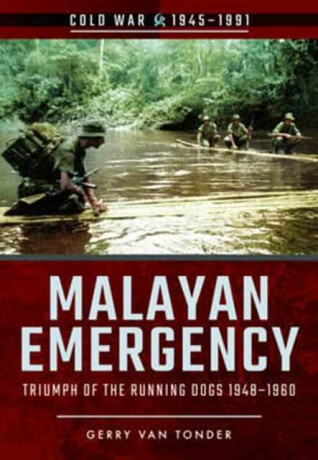
Kniha ( měkká vazba )


When the world held its breath It is 25 years since the end of the Cold War, now a generation old. It began over 75 years ago, in 1944 long before the last shots of the Second World War had echoed across the wastelands of Eastern Europe with the brutal Greek Civil War. The battle lines are no longer drawn, but they linger on, unwittingly or… Přejít na celý popis


5.0 z 5 hvězdiček
Voucher


5.0 z 5 hvězdiček
Voucher

5.0 z 5 hvězdiček
Voucher


When the world held its breath It is 25 years since the end of the Cold War, now a generation old. It began over 75 years ago, in 1944 long before the last shots of the Second World War had echoed across the wastelands of Eastern Europe with the brutal Greek Civil War. The battle lines are no longer drawn, but they linger on, unwittingly or not, in conflict zones such as Iraq, Somalia and Ukraine. In an era of mass-produced AK-47s and ICBMs, one such flashpoint was Malaya By the time of the 1942 Japanese occupation of the Malay Peninsula and Singapore, the Malayan Communist Party (MCP) had already been fomenting merdeka independence from Britain. The Japanese conquerors, however, were also the loathsome enemies of the MCP s ideological brothers in China. An alliance of convenience with the British was the outcome. Britain armed and trained the MCP s military wing, the Malayan People s Anti-Japanese Army (MPAJA), to essentially wage jungle guerrilla warfare against Japanese occupying forces.With the cessation of hostilities, anti-Japanese became anti-British, and, using the same weapons and training fortuitously provided by the British army during the war, the MCP launched a guerrilla war of insurgency. Malaya was of significant strategic and economic importance to Britain. In the face of an emerging communist regime in China, a British presence in Southeast Asia was imperative. Equally, rubber and tin, largely produced in Malaya by British expatriates, were important inputs for British industry. Typically, the insurgents, dubbed Communist Terrorists, or simply CTs, went about attacking soft targets in remote areas: the rubber plantations and tin mines. In conjunction with this, was the implementation of Mao s dictate of subverting the rural, largely peasant, population to the cause. Twelve years of counter-insurgency operations ensued, as a wide range of British forces were joined in the conflict by ground, air and sea units from Australia, New Zealand, Southern and Northern Rhodesia, Fiji and Nyasaland.
0.0 z 5 0 hodnocení čtenářů
0× 5 hvězdiček 0× 4 hvězdičky 0× 3 hvězdičky 0× 2 hvězdičky 0× 1 hvezdička
Získejte přehled o vývoji ceny za posledních 60 dní.
Říká se, že není důležité vyhrát, ale zúčastnit se. Zkuste to...
V předchozím halloweenském čtení jsme se společně ponořili do umění...
Pro miliony diváků zůstane navždy kapitánem Jeanem-Lucem Picardem ze Star...
Co všechno musí vědět člověk, který komentuje finále mistrovství světa...
Tenhle rok vyšly dvě vlčí romantasy, které mě nesmírně bavily. Jednou z...
Pryč jsou dlouhé teplé letní večery, vládu už definitivně převzal...
Vánoce se pomalu blíží a s nimi také období, kdy bychom měli více myslet...
Z příběhu, který málem skončil v šuplíku, se nakonec stal více než...
Knižní závisláci, zbystřete! Největší knižní veletrh na Moravě se...
Podzim chutná nejlépe v Kodani
Jonna nastoupí do kodaňské kavárny, jejíž majitel Mads jí brzy nabídne místo na svém hausbótu. Společně tráví stále víc času a Jonna zjišťuje, že mezi nimi vzniká něco víc než přátelství.
Mohlo by vás zajímat
Jako jediná přežila masovou sebevraždu sekty, v níž vyrůstala.
O dvacet let později se jí na ostrově začnou vracet stejné sny, které kdysi předpověděly smrt jejích blízkých.
Mohlo by vás zajímat
Další kapitola postapo ságy je tady
Temná velekněžka a Šerif vyrážejí do Pustiny, kde vládnou nájezdníci a pravidla tu moc nectí. Čeká je nebezpečná výprava, tajemství a samozřejmě pořádná dávka akce.
Mohlo by vás zajímat
Matika, co počítá s budoucností.
Učebnice, která propojuje čísla, logiku i technologie. Protože i vzorce jdou s dobou.
Mohlo by vás zajímat
Kočičí kletba útočí! Mňauhehe!
Výbušná koťátka se vracejí s pořádnou dávkou kočičí škodolibosti! Karty prokletí dokážou zamíchat každou partií a proměnit zdánlivě nevinný tah v naprostý chaos.
Mohlo by vás zajímat
Mezi řádky se skrývá kouzelný svět!
A tentokrát ho můžete postavit z LEGO® kostek! Propracované dvoupatrové knihkupectví promění vaši knihovnu v místo plné příběhů, fantazie a drobných literárních překvapení.
Mohlo by vás zajímat
Zlatý doušek plný pohody!
Sytě zlatá barva, výrazná vůně a chuť plná exotického koření. Zlatý kurkumový sen vnese trochu slunečné nálady i do toho nejpochmurnějšího dne.
Každý měsíc společně přečteme tisíce knih







Tento web je chráněn službou reCAPTCHA a platí pro něj Zásady ochrany soukromí a Smluvní podmínky. | © 2001–2026 DOBROVSKÝ s.r.o. Všechna práva vyhrazena.









 KnihyDobrovsky.cz
 knihydobrovsky
 @knihydobrovskycz
 @knihydobrovsky