


„Začala jsem, protože můj muž mě měl už dost.“ | Petra Ženíšková v Buď inspirující
Další díl podcastu Buď inspirující je tady! Tentokrát naše pozvání...


Kniha ( měkká vazba )


Při zaslání zboží balíčkem
K nákupu nad 699 Kč dárek zdarma v hodnotě 349 Kč
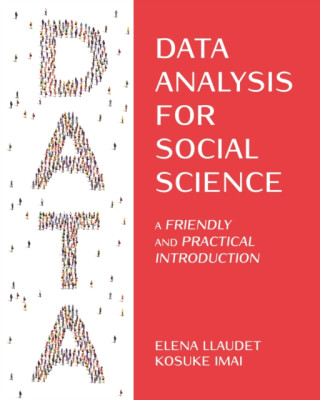
An ideal textbook for complete beginners—teaches from scratch R, statistics, and the fundamentals of quantitative social scienceData Analysis for Social Science provides a friendly introduction to the statistical concepts and programming skills needed to conduct and evaluate social scientific studies. Assuming no prior knowledge of statistics… Přejít na celý popis


5.0 z 5 hvězdiček
Voucher


An ideal textbook for complete beginners—teaches from scratch R, statistics, and the fundamentals of quantitative social scienceData Analysis for Social Science provides a friendly introduction to the statistical concepts and programming skills needed to conduct and evaluate social scientific studies. Assuming no prior knowledge of statistics and coding and only minimal knowledge of math, the book teaches the fundamentals of survey research, predictive models, and causal inference while analyzing data from published studies with the statistical program R. It teaches not only how to perform the data analyses but also how to interpret the results and identify the analyses’ strengths and limitations.
Progresses by teaching how to solve one kind of problem after another, bringing in methods as needed. It teaches, in this order, how to (1) estimate causal effects with randomized experiments, (2) visualize and summarize data, (3) infer population characteristics, (4) predict outcomes, (5) estimate causal effects with observational data, and (6) generalize from sample to population.Flips the script of traditional statistics textbooks. It starts by estimating causal effects with randomized experiments and postpones any discussion of probability and statistical inference until the final chapters. This unconventional order engages students by demonstrating from the very beginning how data analysis can be used to answer interesting questions, while reserving more abstract, complex concepts for later chapters.Provides a step-by-step guide to analyzing real-world data using the powerful, open-source statistical program R, which is free for everyone to use. The datasets are provided on the book’s website so that readers can learn how to analyze data by following along with the exercises in the book on their own computer.Assumes no prior knowledge of statistics or coding.Specifically designed to accommodate students with a variety of math backgrounds. It includes supplemental materials for students with minimal knowledge of math and clearly identifies sections with more advanced material so that readers can skip them if they so choose.Provides cheatsheets of statistical concepts and R code.Comes with instructor materials (upon request), including sample syllabi, lecture slides, and additional replication-style exercises with solutions and with the real-world datasets analyzed.Looking for a more advanced introduction? Consider Quantitative Social Science by Kosuke Imai. In addition to covering the material in Data Analysis for Social Science, it teaches diffs-in-diffs models, heterogeneous effects, text analysis, and regression discontinuity designs, among other things.
0.0 z 5 0 hodnocení čtenářů
0× 5 hvězdiček 0× 4 hvězdičky 0× 3 hvězdičky 0× 2 hvězdičky 0× 1 hvezdička
Získejte přehled o vývoji ceny za posledních 60 dní.
Další díl podcastu Buď inspirující je tady! Tentokrát naše pozvání...
Vánoce už pomalu klepou na dveře a s nimi přichází i každoroční otázka:...
Říká se, že není důležité vyhrát, ale zúčastnit se. Zkuste to...
V předchozím halloweenském čtení jsme se společně ponořili do umění...
Pro miliony diváků zůstane navždy kapitánem Jeanem-Lucem Picardem ze Star...
Co všechno musí vědět člověk, který komentuje finále mistrovství světa...
Tenhle rok vyšly dvě vlčí romantasy, které mě nesmírně bavily. Jednou z...
Pryč jsou dlouhé teplé letní večery, vládu už definitivně převzal...
Vánoce se pomalu blíží a s nimi také období, kdy bychom měli více myslet...
Vítejte v Cape Carnage! Přijedete jednou, zůstanete nadosmrti.
Morbidně humorná dark romance z přímořského městečka, kde turisté mizí pod květinami a místní zahradnice Harper se zaplete se sériovým vrahem Nolanem.
Mohlo by vás zajímat
Mohlo by vás zajímat
Aby zachránila svého bratra, nechá se uvěznit
V Endlocku, brutálním vězení kde bohatí loví vězně pro zábavu, však narazí na dozorce, který jí začne být nebezpečně blízký.
Mohlo by vás zajímat
Na plný plyn až do poslední karty!
Připoutejte se, karetní závod právě začíná! UNO Formula 1 Elite Racers spojuje oblíbenou karetní klasiku se světem rychlých monopostů, elitních jezdců a nečekaných herních zvratů.
Mohlo by vás zajímat
Spirála plná malých objevů!
Pestrobarevná plyšová spirála promění postýlku, kočárek i autosedačku v malé království zábavy. Veselé barvy, zajímavé tvary a hebký materiál lákají miminko k pozorování a objevování.
Mohlo by vás zajímat
Co mě nezabije, to mě posílí!
A co mě napadne, to si zapíšu! Originální blok BOBO s inspirativní ilustrací Lucie Ernestové je připravený zachytit všechny vaše myšlenky, nápady i malé životní výzvy.
Každý měsíc společně přečteme tisíce knih







Tento web je chráněn službou reCAPTCHA a platí pro něj Zásady ochrany soukromí a Smluvní podmínky. | © 2001–2026 DOBROVSKÝ s.r.o. Všechna práva vyhrazena.









 KnihyDobrovsky.cz
 knihydobrovsky
 @knihydobrovskycz
 @knihydobrovsky