


„Začala jsem, protože můj muž mě měl už dost.“ | Petra Ženíšková v Buď inspirující
Další díl podcastu Buď inspirující je tady! Tentokrát naše pozvání...


Kniha ( měkká vazba )
594 Kč s DPH
Jsme transparentní


Při zaslání zboží balíčkem
K nákupu nad 699 Kč dárek zdarma v hodnotě 349 Kč
An illustrated study that casts a new light on Oiticica's most important work of “quasi-cinema” on its fortieth anniversary.Hélio Oiticica (1937–1980) occupies a central position in the Latin American avant-garde of the postwar era. Associated with the Rio de Janeiro-based neo-concretist movement at the beginning of his career, Oiticica moved… Přejít na celý popis


5.0 z 5 hvězdiček
Voucher


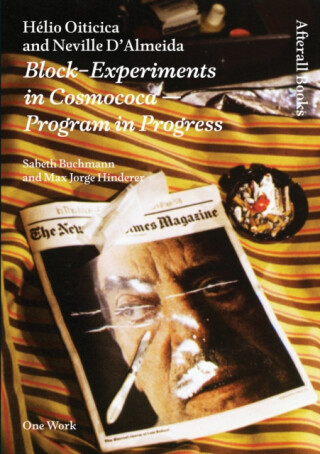
An illustrated study that casts a new light on Oiticica's most important work of “quasi-cinema” on its fortieth anniversary.
Hélio Oiticica (1937–1980) occupies a central position in the Latin American avant-garde of the postwar era. Associated with the Rio de Janeiro-based neo-concretist movement at the beginning of his career, Oiticica moved from object production to the creation of chromatically opulent and sensually engulfing large-scale installations or wearable garments. Building on the idea for a film by Brazilian underground filmmaker Neville D'Almeida, Oiticica developed the concept for Block-Experiments in Cosmococa—Program in Progress (1973–1974) as an “open program”: a series of nine proposals for environments, each consisting of slide projections, soundtracks, leisure facilities, drawings (with cocaine used as pigment), and instructions for visitors. It is the epitome of what the artist called his “quasi-cinema” work—his most controversial production, and perhaps his most direct effort to merge art and life. Presented publicly for the first time in 1992, these works have been included in major international exhibitions in Los Angeles, Chicago, London, and New York.
Drawing on unpublished primary sources, letters, and writings by Oiticica himself, this illustrated examination of Oiticica's work considers the vast catalog of theoretical references the artist's work relies on, from anticolonial materialism to French phenomenology and postmodern media theory to the work of Jean-Luc Godard, Andy Warhol, and Brazilian avant-garde filmmakers. It discusses Oiticica's work in relation to the diaspora of Brazilian intellectuals during the military dictatorship, the politics of media circulation, the commercialization of New York's queer underground, the explicit use of cocaine as means of production, and possible future reappraisals of Oiticica's work.
0.0 z 5 0 hodnocení čtenářů
0× 5 hvězdiček 0× 4 hvězdičky 0× 3 hvězdičky 0× 2 hvězdičky 0× 1 hvezdička
Získejte přehled o vývoji ceny za posledních 60 dní.
Další díl podcastu Buď inspirující je tady! Tentokrát naše pozvání...
Vánoce už pomalu klepou na dveře a s nimi přichází i každoroční otázka:...
Říká se, že není důležité vyhrát, ale zúčastnit se. Zkuste to...
V předchozím halloweenském čtení jsme se společně ponořili do umění...
Pro miliony diváků zůstane navždy kapitánem Jeanem-Lucem Picardem ze Star...
Co všechno musí vědět člověk, který komentuje finále mistrovství světa...
Tenhle rok vyšly dvě vlčí romantasy, které mě nesmírně bavily. Jednou z...
Pryč jsou dlouhé teplé letní večery, vládu už definitivně převzal...
Vánoce se pomalu blíží a s nimi také období, kdy bychom měli více myslet...
594 Kč s DPH
Jsme transparentní
Ve stínu hor přežívají i ta nejtemnější tajemství
Justyna se vrací do krkonošské boudy Odrodzenie , kde ji čeká zmizelý domovník a zloději ve sklepení. Brzy vyplouvají na povrch tajemství z její temné válečné minulosti a dávná vražda.
Mohlo by vás zajímat
Jako jediná přežila masovou sebevraždu sekty, v níž vyrůstala.
O dvacet let později se jí na ostrově začnou vracet stejné sny, které kdysi předpověděly smrt jejích blízkých.
Mohlo by vás zajímat
Aby zachránila svého bratra, nechá se uvěznit
V Endlocku, brutálním vězení kde bohatí loví vězně pro zábavu, však narazí na dozorce, který jí začne být nebezpečně blízký.
Mohlo by vás zajímat
Zlatá horečka mezi chlupatými bandity!
Lišky, straky a mývalové vyrážejí za blyštivou kořistí a nikdo se nechce dělit! V této svižné karetní hře rozhoduje mazanost, správné načasování a schopnost přelstít soupeře.
Mohlo by vás zajímat
Mezi řádky se skrývá kouzelný svět!
A tentokrát ho můžete postavit z LEGO® kostek! Propracované dvoupatrové knihkupectví promění vaši knihovnu v místo plné příběhů, fantazie a drobných literárních překvapení.
Mohlo by vás zajímat
Co mě nezabije, to mě posílí!
A co mě napadne, to si zapíšu! Originální blok BOBO s inspirativní ilustrací Lucie Ernestové je připravený zachytit všechny vaše myšlenky, nápady i malé životní výzvy.
Každý měsíc společně přečteme tisíce knih







Tento web je chráněn službou reCAPTCHA a platí pro něj Zásady ochrany soukromí a Smluvní podmínky. | © 2001–2026 DOBROVSKÝ s.r.o. Všechna práva vyhrazena.









 KnihyDobrovsky.cz
 knihydobrovsky
 @knihydobrovskycz
 @knihydobrovsky