
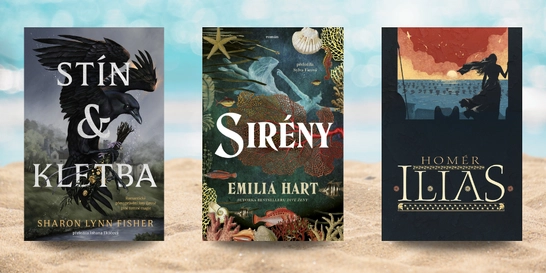
6 červencových novinek, které si přibalit na dovolenou
Slunce svítí, prázdniny jsou v plném proudu a spousta z nás si dopřává...



Kniha ( měkká vazba )


What is economicsÂ’ missing link? Recent economic crises have had a devastating impact on society. Worryingly, they gravely risked a collapse of the financial system. These crises also painfully revealed economicsÂ’ blind spots. Crucially, economics is not an innocent bystander but central to the problem. In this pioneering book, Patrick… Přejít na celý popis

5.0 z 5 hvězdiček
Voucher
5.0 z 5 hvězdiček
Voucher
5.0 z 5 hvězdiček
Voucher
5.0 z 5 hvězdiček
Voucher
What is economicsÂ’ missing link? Recent economic crises have had a devastating impact on society. Worryingly, they gravely risked a collapse of the financial system. These crises also painfully revealed economicsÂ’ blind spots. Crucially, economics is not an innocent bystander but central to the problem.
In this pioneering book, Patrick Schotanus explains that economicsÂ’ mechanical worldview is the ontological error which leads to flawed thinking and faulty practices. The Market Mind Hypothesis (MMH) thus calls it "mechanical economics": it not only erroneously views but also dangerously treats the economy as a machine, the market as an automaton, and its agents as robots. Inspired by heterodox economic and leading cognitive thinkers, this book offers an alternative paradigm. Central to MMHÂ’s psychophysical worldview is the fact that consumers, investors, and other participants are conscious beings and that their mindsÂ’ extension makes consciousness a reality in markets, exemplified by market mood. Specifically, denial of the complex mind~matter exchanges as the essence of markets means the extended mind~body problem is economicsÂ’ elephant in the room.
The book argues that if mechanical economics is the answer, we have been asking the wrong questions. Moreover, we will not solve our economic predicaments by doubling down on the assumption of rationality, nor by identifying yet another behavioural bias. Instead, scholars and students of economics and finance as well as finance practitioners need to investigate—through cognitive economics—the deep links between markets and minds to better understand both.
With a foreword by investment strategist Russell Napier, an intermezzo by neuroscientist and complexity pioneer Scott Kelso, and an afterword by 4E cognition philosopher Julian Kiverstein.
0.0 z 5 0 hodnocení čtenářů
0× 5 hvězdiček 0× 4 hvězdičky 0× 3 hvězdičky 0× 2 hvězdičky 0× 1 hvezdička
Získejte přehled o vývoji ceny za posledních 60 dní.
Slunce svítí, prázdniny jsou v plném proudu a spousta z nás si dopřává...

Pokud vám seriál Heated Rivalry (Spalující rivalita) nedal spát a zhlédli...
Pokud nevíte, zda sáhnout po „nové Lukáškové“, váš osobní...

Tahle kniha se ke mně původně dostala jen proto, abych ji předala někomu z...
Nestihli jste naše žhavé literární odpoledne na Masarykově nádraží, nebo...
Po dočtení poslední knihy, která byla na můj vkus až příliš...
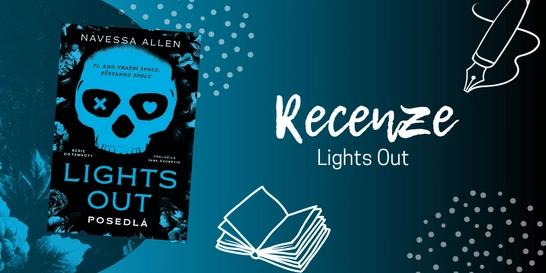
Už jste také někdy spadli do pasti algoritmu sociálních sítí? Znáte to....
Ne vždycky má člověk chuť vyrážet na nákup do obchodního centra. Někdy...
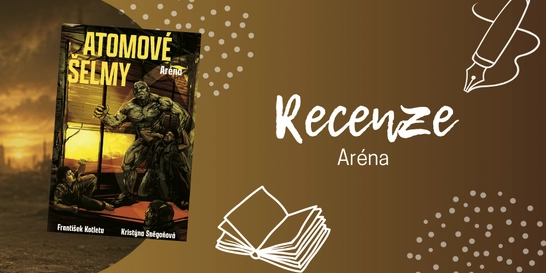
Pokud jste unavení ze všech těch varování, že světu hrozí atomová válka...
Elitní baletka. Záchranář, který ji kdysi ztratil. A city, které nezmizely.
Allie celý život bojovala o dokonalost, dokud její kariéru neohrozilo vážné zranění. A právě ve chvíli, kdy se jí začíná rozpadat svět, znovu vstoupí do jejího života Hudson.

Mohlo by vás zajímat
Zběsilá postapo jízda pokračuje
Hřbitov není místo pro slabé povahy ani pro romantické procházky za soumraku. Postapo nářez plný mutací, šílenství a bohů, kteří možná nikdy neměli být probuzeni.
Mohlo by vás zajímat
Tři ženy, pět století, jedno tajemství...
Dechberoucí příběh o ženské síle, odhodlání a hlubokém spojení s přírodou.
Mohlo by vás zajímat
Matika, co počítá s budoucností.
Učebnice, která propojuje čísla, logiku i technologie. Protože i vzorce jdou s dobou.
Mohlo by vás zajímat
Modrá klasika do každé aktovky
Žádné zbytečné kouzlení, jen poctivý sešit pro každodenní psaní.
Mohlo by vás zajímat
UNO, tvrdší než kdy předtím
Nelítostné karty, brutální postihy, škodolibá radost a taktické bitvy!
Mohlo by vás zajímat
Mohlo by vás zajímat
Malý kousek galerie na knížky, drobnosti i menší nákup
Plátěná taška Paperblanks Natsu díky pevné bavlněné látce unese až 7 kg.
Každý měsíc společně přečteme tisíce knih






Tento web je chráněn službou reCAPTCHA a platí pro něj Zásady ochrany soukromí a Smluvní podmínky. | © 2001–2026 DOBROVSKÝ s.r.o. Všechna práva vyhrazena.






 KnihyDobrovsky.cz
 knihydobrovsky
 @knihydobrovskycz
 @knihydobrovsky