


Otevřeli jsme novou prodejnu KNIHY DOBROVSKÝ v Třebíči
Máme dobrou zprávu pro všechny čtenáře z Třebíče a okolí. Nově nás...


Kniha ( pevná vazba )


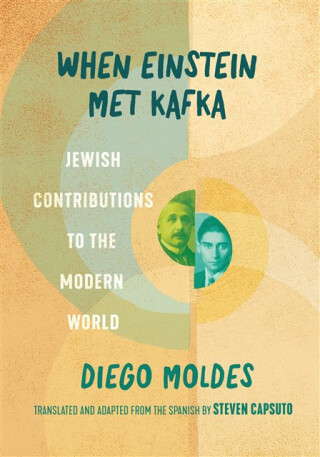
In April 1911, Prague artists, writers, and intellectuals often gathered nightly at the Café Louvre, an intellectual center where music was played and high-level discussions were held. Many of the attendees were German-speaking Jews, such as Franz Kafka and his faithful friend Max Brod, Hugo Bergmann, Oskar Kraus, Franz Werfel, the… Přejít na celý popis


5.0 z 5 hvězdiček
Voucher


5.0 z 5 hvězdiček
Voucher


5.0 z 5 hvězdiček
Voucher

In April 1911, Prague artists, writers, and intellectuals often gathered nightly at the Café Louvre, an intellectual center where music was played and high-level discussions were held. Many of the attendees were German-speaking Jews, such as Franz Kafka and his faithful friend Max Brod, Hugo Bergmann, Oskar Kraus, Franz Werfel, the mathematician Georg Pick, and a new arrival to the city, thirty-two-year-old Albert Einstein. Is it possible that Kafka and Einstein met and exchanged ideas? Did they influence each other from a philosophical or deep-thinking perspective? In neither Kafka's nor Einstein’s correspondence there is not even the slightest mention of each other. But Einstein and Kafka, two icons of our modern era, serve as the starting point for this book on the enormous contributions in the fields of the empirical sciences, humanities, letters, and arts by individuals of Jewish origin in modernity. In this book, the reader will encounter numerous names in the pages that all spring from the fountainhead of these two antecedents, the Einsteinian and the Kafkian.
While Jews account for 0.2 percent of the world’s population and no more than 2.5 percent of any country except Israel, they have made some of the greatest contributions to Western Culture in diverse fields that range from physics and philosophy to music and art. One register of these contributions is the Nobel Prizes: from their first recipients in 1901, 26 percent of awardees in the Nobel’s six fields — among them, physics, physiology/medicine, and economics — have been Jews. What accounts for the extraordinary breadth of these achievements? This is a question that Diego Moldes examines in When Einstein Met Kafka.
His answers include the history of Jewish culture itself, whether religious or secular, with its emphasis on literacy, learning, and especially inquiry and questioning. Until the European Enlightenment in the 18th century, Jews did not have full citizenship and civil rights — they were barred from universities, from government, and from entire professions. The Enlightenment opened the doors!
Despite the outbreaks of violent anti-Semitism — or what Diego Moldes calls Judeophobia — and continuing discrimination in all Western countries, Jews now had legal rights, and they persevered. In a near-encyclopedic fashion, he profiles just how thousands of individual Jews, by name, made original contributions to fields as diverse as medicine, artificial intelligence, philosophy, history, economics, business, world finance, computing, sports, film, architecture, and more! The book itself is an extraordinary achievement, the result of twenty years of intensive research, yet written in an immensely engaging style that has been translated and adapted for English readers from the Spanish by Steven Capsuto.
0.0 z 5 0 hodnocení čtenářů
0× 5 hvězdiček 0× 4 hvězdičky 0× 3 hvězdičky 0× 2 hvězdičky 0× 1 hvezdička
Získejte přehled o vývoji ceny za posledních 60 dní.
Máme dobrou zprávu pro všechny čtenáře z Třebíče a okolí. Nově nás...
Saving 6 je třetím dílem série Kluci z Tommenu. Je to kniha plná bolesti,...
Máte chuť na audioknihu, ale zrovna se vám nechce rozšiřovat knihovničku o...
Sarah J. Maas nám zase hodila drobeček a fandom má samozřejmě o čem...
Když v roce 2024 vznikalo Dobro.čtení, stálo na jasné myšlence: přinést...
Podzimní čtenářská sezona se pomalu rozjíždí a s ní přichází i náš...
Dominika Dhrožňák svou cestu ke psaní začala už kolem dvanácti let, kdy si...
Letošní podzim bude pro český knižní trh výjimečný. Od 7. do 11. října...
Ano, víme, že je teprve září. Ano, víme, že do Vánoc zbývá ještě...
Jako jediná přežila masovou sebevraždu sekty, v níž vyrůstala.
O dvacet let později se jí na ostrově začnou vracet stejné sny, které kdysi předpověděly smrt jejích blízkých.
Mohlo by vás zajímat
Toto není sci-fi, to je příběh, který se stane
Česká republika roku 2060 je rozdělená generačním konfliktem a vražda mladého politika může souviset s podivnou hrou, která ovládá životy mladých. Leoš Kyša přináší mrazivou vizi české budoucnosti.
Mohlo by vás zajímat
Toto není sci-fi, to je příběh, který se stane
Česká republika roku 2060 je rozdělená generačním konfliktem a vražda mladého politika může souviset s podivnou hrou, která ovládá životy mladých. Leoš Kyša přináší mrazivou vizi české budoucnosti.
Mohlo by vás zajímat
Učebnice pro školu i život
Stručný přehled 2026/2027 nabízí všechna důležitá ekonomická témata v jedné učebnici. Od základních pojmů přes podnikání až po finanční trhy pomůže studentům rychle se zorientovat.
Mohlo by vás zajímat
Mohlo by vás zajímat
Z filmové garáže na vaši polici
Hot Wheels Premium 84 MUSTANG SVO do sbírky fanoušků Rychle a zběsile i milovníků výrazných sportovních vozů
Mohlo by vás zajímat
Prožijte celý rok ve společnosti knih!
Každý týden vám inspirativní čeští autoři, překladatelé, redaktoři, ilustrátoři a další osobnosti odpoví na jednu zajímavou, vtipnou nebo záludnou otázku.
Každý měsíc společně přečteme tisíce knih



Tento web je chráněn službou reCAPTCHA a platí pro něj Zásady ochrany soukromí a Smluvní podmínky. | © 2001–2026 DOBROVSKÝ s.r.o. Všechna práva vyhrazena.







 KnihyDobrovsky.cz
 knihydobrovsky
 @knihydobrovskycz
 @knihydobrovsky