
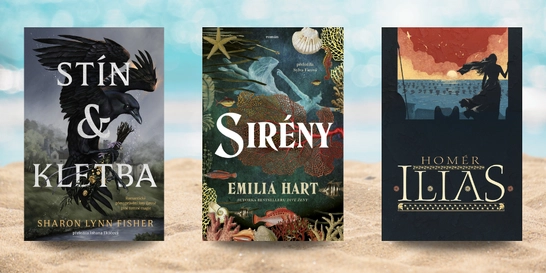
6 červencových novinek, které si přibalit na dovolenou
Slunce svítí, prázdniny jsou v plném proudu a spousta z nás si dopřává...



Kniha ( měkká vazba )


Extensive archaeological investigations were undertaken over two decades in Hinxton, south Cambridgeshire by OA East on behalf of the Wellcome Trust. The excavated areas lay in the Cam valley, a ‘borderland zone’ crossed by Icknield Way; the ridgeway route and the River Cam providing natural corridors of movement and communication.Â… Přejít na celý popis
Extensive archaeological investigations were undertaken over two decades in Hinxton, south Cambridgeshire by OA East on behalf of the Wellcome Trust. The excavated areas lay in the Cam valley, a ‘borderland zone’ crossed by Icknield Way; the ridgeway route and the River Cam providing natural corridors of movement and communication. Hinxton’s post-glacial valley landscape of indigenous woodland, streams and seasonally flooded pools attracted Palaeolithic and Mesolithic communities to the area. Fills of one pool yielded a Terminal Palaeolithic ‘Long/Bruised Blade’ assemblage of national significance. Tree clearance to permit exploitation of the fertile valley sides began in the Early Neolithic. The increasingly ‘ritual’ or ceremonial significance of the landscape is indicated by a Late Neolithic/Early Bronze Age shaft containing a substantial assemblage of worked flint and Beaker pottery. During the later prehistoric and Early Roman periods, two square enclosures – the largest related to mortuary practices – were followed by a small timber shrine. Burial of selected individuals, both in graves and as disarticulated remains, occurred sporadically throughout prehistory. Agricultural exploitation of the valley seems to have been almost continuous from the Early Neolithic until the Middle Roman period, after which the land lay largely fallow. Conquest period large corrals linked to major trackways potentially demonstrate stock management on a scale commensurate with supplying the nearby fort and Roman town at Great Chesterford. The immediate landscape was not resettled until the Anglo-Saxon period. Post-Roman activity at Hinxton is the subject of a companion volume (Part II).
0.0 z 5 0 hodnocení čtenářů
0× 5 hvězdiček 0× 4 hvězdičky 0× 3 hvězdičky 0× 2 hvězdičky 0× 1 hvezdička
Získejte přehled o vývoji ceny za posledních 60 dní.
Slunce svítí, prázdniny jsou v plném proudu a spousta z nás si dopřává...

Pokud vám seriál Heated Rivalry (Spalující rivalita) nedal spát a zhlédli...

Pokud nevíte, zda sáhnout po „nové Lukáškové“, váš osobní...

Tahle kniha se ke mně původně dostala jen proto, abych ji předala někomu z...

Nestihli jste naše žhavé literární odpoledne na Masarykově nádraží, nebo...

Po dočtení poslední knihy, která byla na můj vkus až příliš...

Už jste také někdy spadli do pasti algoritmu sociálních sítí? Znáte to....

Ne vždycky má člověk chuť vyrážet na nákup do obchodního centra. Někdy...

Pokud jste unavení ze všech těch varování, že světu hrozí atomová válka...
Každý konec je začátek něčeho nového
Po smrti manžela odjíždí Pixie na francouzský zámek, který spolu koupili. Místo nového začátku tam ale objeví tajemství, které jí převrátí celý život.

Mohlo by vás zajímat
Nový román Viktorie Hanišové
Když se její otec upálí před Poslaneckou sněmovnou, začne Lada hledat důvody jeho činu.
Mohlo by vás zajímat
Nová temná romance od Tess M. Puffrové
Měl to být nový začátek. Místo toho ji čeká nebezpečně přitažlivý student, stalking a les plný tajemství, která se neměla dostat ven.
Mohlo by vás zajímat
Učebnice, co drží krok s dobou.
Nová generace učebnic, která jede podle nejnovějšího RVP, ne podle Windows 95.
Mohlo by vás zajímat
Ať víte, kdy je matika, keramika i posilovna
Rozvrhy, kroužky, poznámky i důležité termíny pěkně pohromadě. Praktický školní kalendář pomůže sladit povinnosti i volný čas bez zbytečného zmatku.
Mohlo by vás zajímat
Rychlejší než blesk!
Rozšiřte svou klasickou sadu o Speed Pack a dodejte vašemu UNO nový život.
Mohlo by vás zajímat
Mohlo by vás zajímat
Kapitola u bazénu? Klidně.
Vodotěsné provedení vám dovolí číst u vody, na pláži i ve vaně bez zbytečných obav.
Každý měsíc společně přečteme tisíce knih







Tento web je chráněn službou reCAPTCHA a platí pro něj Zásady ochrany soukromí a Smluvní podmínky. | © 2001–2026 DOBROVSKÝ s.r.o. Všechna práva vyhrazena.






 KnihyDobrovsky.cz
 knihydobrovsky
 @knihydobrovskycz
 @knihydobrovsky